[Books] [Events] [Gallery] [Press] [Book Doctor] [Contact]
"The sirens that sang in the old stranger's dreams were the sirens of West Canaan."
-- from "Angel Fire"
About the Author
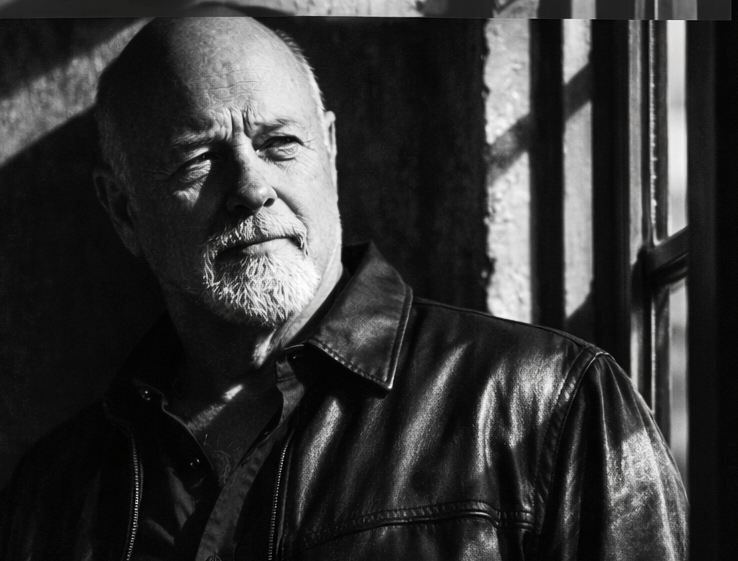
Over the years, Ron Franscell's books have earned high praise from bestselling authors such as Ann Rule, John Lescroart, Vincent Bugliosi, C.J. Box, Howard Frank Mosher, and Warren Adler. His writing has been compared to Truman Capote, Robert Olen Butler, Norman McLean, Cormac McCarthy and Charles Frazier. Now, meet the author.
Ron grew up in Wyoming. A lifelong journalist, he worked for newspapers in Wyoming, New Mexico and California's Bay Area before hitting the road in one of American journalism's best beats, covering the evolution of the American West as a senior writer for the Denver Post. Shortly after 9/11, he was dispatched by the Post to cover the Middle East during the first few months of the Afghan war. In 2004, he became the managing editor for the Beaumont (TX) Enterprise, where he covered the devastation of Hurricane Rita from inside the storm. He now lives in San Antonio, Texas.
His debut novel,
ANGEL FIRE, was published by Laughing Owl in 1998, and reprinted by Berkley (Penguin/Putnam) in 2000. His popular mystery,
THE DEADLINE, was published in 1999, followed by a sequel,
THE OBITUARY. His book reviews and essays are regularly published in many of America's biggest and best newspapers, such as the Washington Post, Chicago Sun-Times, San Francisco Chronicle, Denver Post, San Jose Mercury-News, St. Louis Post-Dispatch, Milwaukee Journal-Sentinel and others. He has been a guest on CNN, Fox News, NPR, the Today Show, ABC News, and other major broadcast outlets all over America.
And
THE DARKEST NIGHT (also titled FALL in a 2007 hardcover) continues to be a bestselling true crime. This intensely personal nonfiction about a monstrous crime that touched his life as a child has been hailed by authors such as Ann Rule and Vincent Bugliosi, as well as critics, as a direct literary descendant of Truman Capote's "In Cold Blood."
DELIVERED FROM EVIL (2011) explores the entangled lives of mass-murderers and their victims, tracing the lives of 10 ordinary people who survived some of America's worst massacres. Auspiciously, it debuted on the day a deranged young gunman killed six and wounded 13 at a Tucson supermarket in one of the most shocking crimes of our day.
THE CRIME BUFF'S GUIDE TO THE OUTLAW ROCKIES (September 2011) is a quirky travel guide taking true-crime and history travelers to some 400 outlaw- and crime-related sites all over Wyoming and Colorado, continuing a series started with
THE CRIME BUFF'S GUIDE TO OUTLAW TEXAS (2010). Look for the next in the series,
OUTLAW WASHINGTON DC in fall 2012.
Ron's latest book is a significant departure from true crime.
THE SOURTOE COCKTAIL CLUB is an intimate account of Ron's extraordinary road trip to the Yukon with his son, where they drank a cocktail containing a mummified human toe and spent the longest day of the year under an Arctic sun that never set. Magical. But i9t's also an intimate exploration of what it means to be a father and a son. Praised by legendary authors such as W.P. Kinsella, Ivan Doig, William Least Heat Moon and others,
SOURTOE moves road memoirs a little farther on their journey.
Keep in touch with Ron at


Twenty Questions
Ron sat down with one of his favorite journalists to answer a few questions about life and writing. Here's the interview conducted by Ashley Franscell Detrick, his daughter who is in the third generation of journalists in her family.
Question: Was there any difficulty transitioning from newspaperman to novelist?
A: The transition has been made by so many writers, such as Hemingway and Twain, it might seem natural, but it isn't. I believed it would be like shifting gears in a car, where the transmission is set differently for shorter and longer trips. I saw book-writing as just a longer trip. No problem, just shift into gear and settle back. I was wrong. Much of what we learn in journalistic storytelling is anathema to longer writing, especially fiction. In a newspaper, we're taught to distance ourselves from the material, to put our emotions in a box, to write short, fabricate nothing, write fast, and put the most important thing first. A novel would be very short if we put the most important thing first! But everything is fabricated, the revision is endless, and the story would be empty if it wasn't filled with an author's emotion.
Think about it: a poet, a songwriter, a news anchorwoman and a technical writer are all wordsmiths and each tells a kind of story -- but none of a news anchorwoman's skills make her a natural poet . . . none of a songwriter's talents suggest he could write a good technical manual. We have many storytelling modes, and each requires special proficiencies.
So I spent six arduous, unsatisfying months starting a novel that I literally destroyed. It was too reportorial, too distant. Then came a low-grade epiphany. I realized I must become a beginning writer again -- after almost 20 years in newspapering -- and began to educate myself about book authorship. Once I got past the errant and arrogant notion that a newspaperman was naturally gifted to write a book, I was free.
Q: A journalist works in fact and a novelist works in fiction. How much are they blended in your work?
A: Some cynics today would say they're the same thing! There are elements of one that can improve the other, but fiction has no place in reportage, of course. My fiction has benefited from the authenticity of my newspaper writing, and my newspaper writing has benefited from my development of a more distinct voice and confidence in long fiction. They are blended most inextricably in my upcoming true-crime book, where I'm telling a true story with some of the tools in a novelist's toolbox, such as foreshadowing, dramatic pacing, dialogue, and a more literary flourish.
Q: Have you always been a writer?
A: No, but I have always been a reader. I have been reading literally longer than I can remember. That's how it starts for every writer, just loving the stimulation of imagination. I loved writing little stories when I was very young, maybe second or third grade. When I was in seventh grade, a friend and I started a campus paper for our junior high school, and my byline has appeared in some kind of publication every year since I was 12. But I was almost 20 -- well into college -- before I saw writing as a possible career. Up to that time, working on school papers just seemed like a cool extracurricular dalliance, no more career-oriented than chess club.
Q: Each of your books has been set in the West. The fictional towns of West Canaan (Angel Fire) and Winchester (The Deadline) comprise genuine elements of many western places. What's so important to you about Western landscapes?
A: The West is heart-earth to me. Out here, the landscape shapes us as much as we shape it. Landscape -- and by extension, weather, seasons and climate -- makes Western literature unique, and often plays a role in any story. I grew up and have worked in small towns, and I love the texture of a place. The simple image of a small-town water tower in "Angel Fire" piques the memory banks of anyone who grew up in a place where the water tower loomed over everything.
West Canaan and Winchester are composite places, cobbled together from memory, imagination and reality. Everywhere and nowhere. They bring together many of the things that characterize small, high plains towns, from the courthouse lawns, to the balky back doors of rural movie houses, to the intimacy of this tiny settlment surrounded by nothingness. I seek familiarity when writing about a small town, and in small towns I find the most resonant memories and emotions.
Q: What is your ultimate goal as a writer?
A: To write something that will outlive me. To tell a story that the children of children of children of my own children can say, "I never met him, but I know him."
Q: Which is more appealing to you, journalistic writing or fiction writing?
A: My heart will probably always be in newspapers. I got into this business in the salad days of newspapering, the Seventies,
|
"I have been reading literally longer than I can remember. That's how it starts for every writer, just loving the stimulation of imagination."
|
when reporters conducted themselves like knights and readers trusted us to speak truth. Newspapers can do what books have seldom done: Change communities for the better. The pendulum has swung to a different height now, and the craft sometimes is its own worst enemy, but I still believe people want honest, good people to tell them what's happening just beyond their view. In the Cyber Age, we might see the death of newspapers-on-paper, but there will always be a need for honest, good people to observe and report what is happening. The Internet, as it exists now, can be a seedy and untrustworthy place, and I believe readers will eventually seek out the farthest corners of that vast "library" for information they can trust.
Q: What is your favorite book that you've written? Why?
A: That's like picking my favorite child! Each has its own special place in my heart for different reasons. And my as-yet-unpublished projects are like having a new baby in the house.
Q: What is the writing process? How do you come up with stories? How do you put yourself in a place to write what you write?
A: I try to write every day. When I have a book project, I focus on it for a minimum five hours a day, either writing or researching. Story ideas come from everywhere, and I have more of them than I'll ever be able to write in ten lifetimes.
A lot of people think writers write only when the Muse touches them, or when inspiration comes. That's just not true. Writing is a job, and some days, a writer must sit down and write without the benefit of inspiration. The blank page awaits. Hemingway called it the "great white bull." Most days, maybe, you simply trust your instincts and your skills to carry you. I have often just plopped down at my desk and started writing as if it were another day on the Death March. Very often, a rhythm develops and you are suddenly -- and safely -- telling a story.
Q: Your upcoming true-crime [tentatively titled FALL] is about a grotesque crime that happened to young friends of yours when you were a child. Was it difficult to explore the memories and emotions of an event that surely affected your life?
A: I was shielded by my journalistic training. While the abduction, rape and murder of two young friends certainly churned inside, I was able to take one step back from it to tell the story. On the other hand, it was important to explore my memories and emotions to make the book something more than a dispassionate account of a passionate crime.
Q: What is the hardest thing about what you do?
A: Selling it.
Q: Each of your books has a subtle spirituality. Is faith important to you?
A: I'm spiritual, not religious. I never spent much time going to church -- any church -- when I was younger. But I'm fascinated by the process of faith, to be honest. Each of my books contains some reference to or exploration of religious devotion. Why and how we believe in something, anything, captivates me. I'm further intrigued by the nexus of religion and mythology. Why do we tell similar stories for millennia? How can the Biblical life of Christ resemble dozens of other heroes? journeys in mankind's timeless stories, which we call "myths"? We don't hesitate to refer to the Greek and Roman "gospels" about their own gods and creation as myths; we don't even have much problem when referring to Islamic, Hindu and Buddhist mythologies. But there's always an uncomfortable shifting in chairs when I talk about "Christian mythology" at book events or workshops. I'm neither an atheist nor an agnostic, but I believe that we make our own choices in life, without the help or hindrance of a higher power.
Q: You've often spoken about your fascination with "upliftingly sad" endings. Explain.
A: They're complex. Once upon a time, book publishers were the arbiters of our storytelling sensibilities. But back in the Seventies, when they realized Hollywood was making far more money, everything changed. Today, the manuscript that reads more like a movie -- where happy endings are the rule -- is more likely to be published than a book like, oh say, "The Great Gatsby" or "The Old Man and Sea," where something marvelous, endearing or redemptive can arise from tragedy.
That's a hallmark of literary writing: The character changes as he moves through an engaging plot. He's not the same character at the end. Literature is character-driven, where commercial fiction is plot-driven. It wasn't always separate. Our greatest writers blended character and plot until publishing's profit motives separated them. "American literature" became an oxymoron.
I want to write stories where character and plot are equally compelling and engaging.
Q: You've written a literary fiction, a couple of mysteries, a few screenplays, and a very intimate true crime that borders on being a memoir -- all after a long career in newspapering. How can an author be so diverse and succeed?
A: Oh my, and in the future, I have an epic historical adventure exploring violence and faith, and another literary story about the agonizing frailty of memory. The insufferable know-it-alls in publishing will smugly advise novelists to write what's in their hearts, but publishing is a risk-averse business and they're most interested in what has already succeeded for somebody else. Those same experts will sternly warn that there's very little chance of publishing anything anyway ... so it seems to me a writer should do what he wants to do and hope his agent is versatile and devoted. If I fail at publishing, at least I fail telling stories I want to tell. Publishing's suits simply don't understand true storytellers. I've been advised to select a genre and do nothing else. I won't. I dreamed the basic plot for "The Deadline," for Pete's sake. It was a mystery. What if I only wrote romances or seagoing adventures?
Q: Parts of your books are pretty witty, often at unexpected moments. Does that come naturally?
A: Humor is essential for many reasons, in books and in life. I want to make readers laugh and cry in my work, and to feel everything in between. My own sense of humor is influenced by National Lampoon, MAD Magazine, Monty Python, and Saturday Night Live -- a kind of contemporary slapstick, sometimes cerebral, occasionally bawdy. Making somebody laugh takes more skill than making them cry. I like a challenge.
Q: Do you read your novels when they are finished and in book form?
A: I read them more than I'd like during the revision process, but I've never sat down to read one of my own books, cover to cover, after it was published. When I read excerpts at book events, the audience hears the words on the page, but I'm often wincing and editing in my head.
Q: What do you do when you aren't writing?
A: Listen. Try to keep up with a century-old house. Fish. Wish my kids visited more often. Travel. And feel guilty that I'm not writing.
Q: Which writers have inspired you, and what do you look for in a work of fiction?
A: Hemingway, for his economy of language and his boldness. John Fowles ("The Magus," "The Collector") for the beauty of his language and the complexity of his mind. W.P. Kinsella for showing me the breadth of imagination. Pat Conroy and John Irving for being distinctive voices in a risk-averse marketplace. Homer, Jim Harrison, Sherwood Anderson, Jack London, Sinclair Lewis, William Kennedy ... and so many others.
The best fiction, in my view, blends character and plot. It looks more like Conroy than Clancy. It harks back to a time when a story was many things, not just one thing. I have no patience for today's mega-selling, fill-in-the-blanks butter-churners whose characters are flat, without a capacity to learn and change.
Q: Is there a literary character whom you wish you would have created?
A: Oh my, yes. Boo Radley. Or Ulysses. Or maybe Francis Phelan ("Ironweed"). No wait ... Nick Adams. Hmmmm. Rosasharn Joad ("Grapes of Wrath.") Ray Kinsella ("Shoeless Joe.") Nick Urfe ("The Magus.") Tristan Ludlow ("Legends of the Fall.") Elmer Gantry ... any one of those.
Q: Where do your characters come from? Are they people you know?
A: Sometimes. They are usually composites. Her nose, his impatience ... that sort of thing. People have asked if any of my characters are autobiographical, and while Cassidy McLeod and Jeff Morgan are both journalists and about my age (at the time the books came out), they only exhibit a few of my intensely personal characteristics. What are those? I'm not telling.
Q: What's ahead for you?
A: In my book-writing, I'm going back to fiction. It's a kind of sanctuary after the gauntlet of an intimate non-fiction. I hope to finish the epic adventure novel I started a few years ago, exploring faith and violence in an evolving West. I am eager to get started on a contemporary literary novel that I've been pondering for years, a novel I must be older and wiser to write. Time is a writer's friend ... except on deadline.
[Bio] [Books] [Events] [Gallery] [Press] [Contact]